
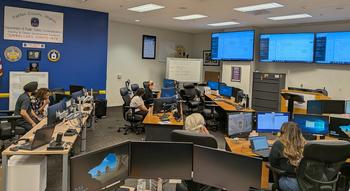
In a high-stakes application of Mason’s digital expertise, researchers are now leveraging Artificial Intelligence to revolutionize 9-1-1 dispatcher training. By creating sophisticated AI-driven simulations, Mason is helping emergency responders practice handling complex, high-pressure calls in a controlled environment.
The Real-World Impact of Digital Innovation
While the $1.5M AI Data Center Lab provides the “brawn” (computing power), this project represents the “brain”—the specialized algorithms that solve societal challenges.
Key Contributions to the Ecosystem:
- Human-Centric AI: This project highlights a core IDIA pillar: Human-Machine Collaboration. The goal isn’t to replace dispatchers, but to use AI to augment their skills, reduce burnout, and improve emergency outcomes.
- Interdisciplinary Collaboration: This initiative bridges the gap between the College of Engineering and Computing (CEC) and public safety agencies. It serves as a model for how IDIA’s new Executive Director, Massimiliano Albanese, can facilitate partnerships that have immediate community impact.
- A Testing Ground for New Tenants: Companies like SNC or Babel Street (our new FUSE tenants) who specialize in national security and threat intelligence now have a local, academic benchmark for how AI can be deployed in public safety.
Bridging Research and Public Safety
By digitizing the “training manual,” Mason is ensuring that Virginia’s first responders are equipped with the most advanced tools available.
“AI allows us to create realistic, varied scenarios that traditional training simply can’t match. We are preparing dispatchers for the unpredictable, using the very technology we are developing here at Mason.” — Mason Research Lead