The robotics industry is experiencing a massive global shift, moving away from stationary industrial machines toward dynamic service robots designed to interact with human environments. Yet, a major computational bottleneck is slowing this transition down.
Currently, traditional robotics rely on repetitive planning. Every time a robot encounters a new setting, it calculates its path and actions from scratch, regardless of how similar the environment is to places it has been before. This constant need for replanning demands immense computational power, making advanced robots expensive and limiting their real-world performance.
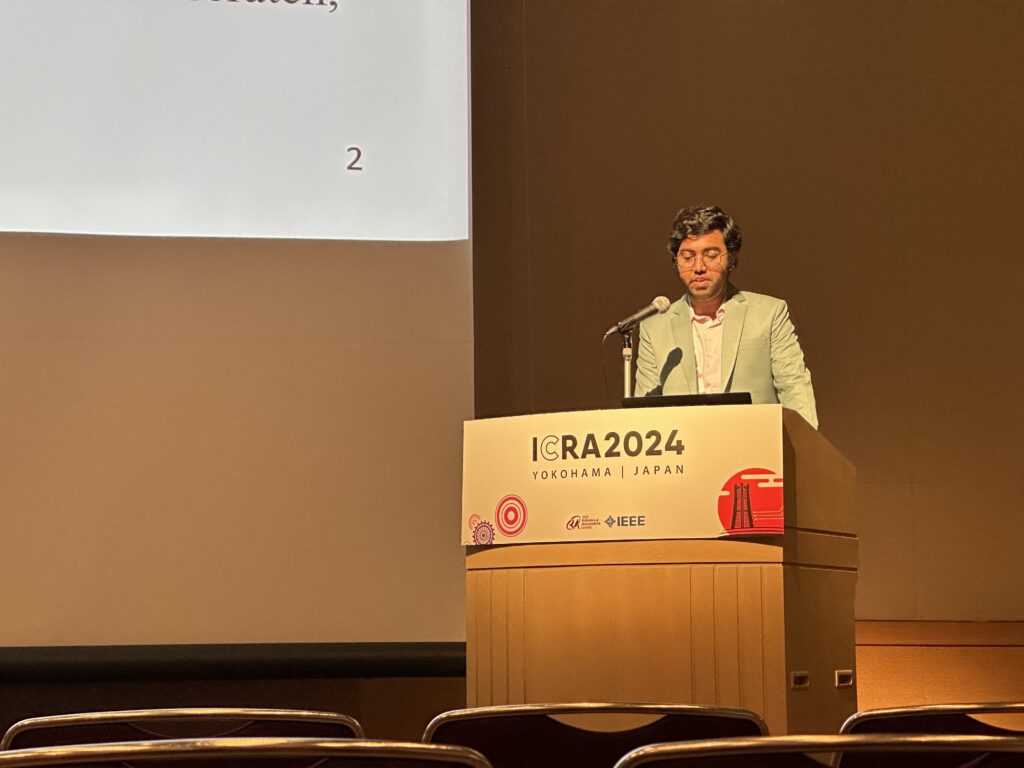
Former IDIA Pre-Doctoral Fellow Dibyendu Das is addressing this limitation by giving robots a sense of “memory.”
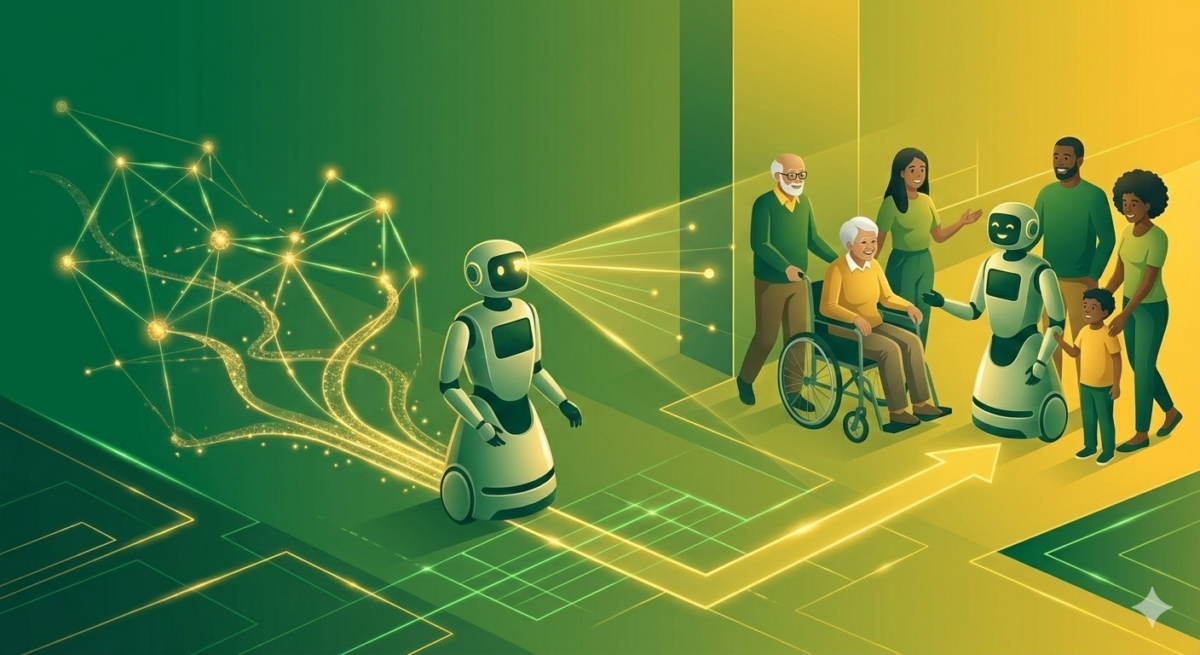
His research leverages machine learning techniques to help robots recall past planning experiences. By designing advanced motion planners that can reference these previous successes, his approach drastically reduces the need to continuously recalculate in similar situations.
The ripple effects of this technological leap are profound. By significantly reducing the computational needs of these machines, Dibyendu is making service robots far more cost-effective and efficient for wider deployment.
This is not just about convenience; it is a matter of accessibility. Lowering the cost of service robots facilitates an ecosystem where robotic assistance can reach diverse groups, including the elderly and disabled, for whom such technology can be truly life-changing. Furthermore, bringing efficient robots out of academic labs and into everyday life provides vital educational exposure, fostering interest in STEM fields for underrepresented communities.
Meet the Researcher: Dibyendu Das is a researcher dedicated to advancing machine learning and advanced motion planning to create efficient, cost-effective, and accessible robotic technologies for real-world applications.