
When a public health crisis strikes, policymakers rely heavily on mathematical epidemiological models to forecast the spread of disease. However, these traditional models often struggle with a highly unpredictable variable: human behavior. Pandemics are not merely biological events; they are profoundly social ones, driven by how people choose to move, interact, and isolate.
Without accounting for these human decisions, public health interventions can sometimes lead to unintended, disruptive outcomes.
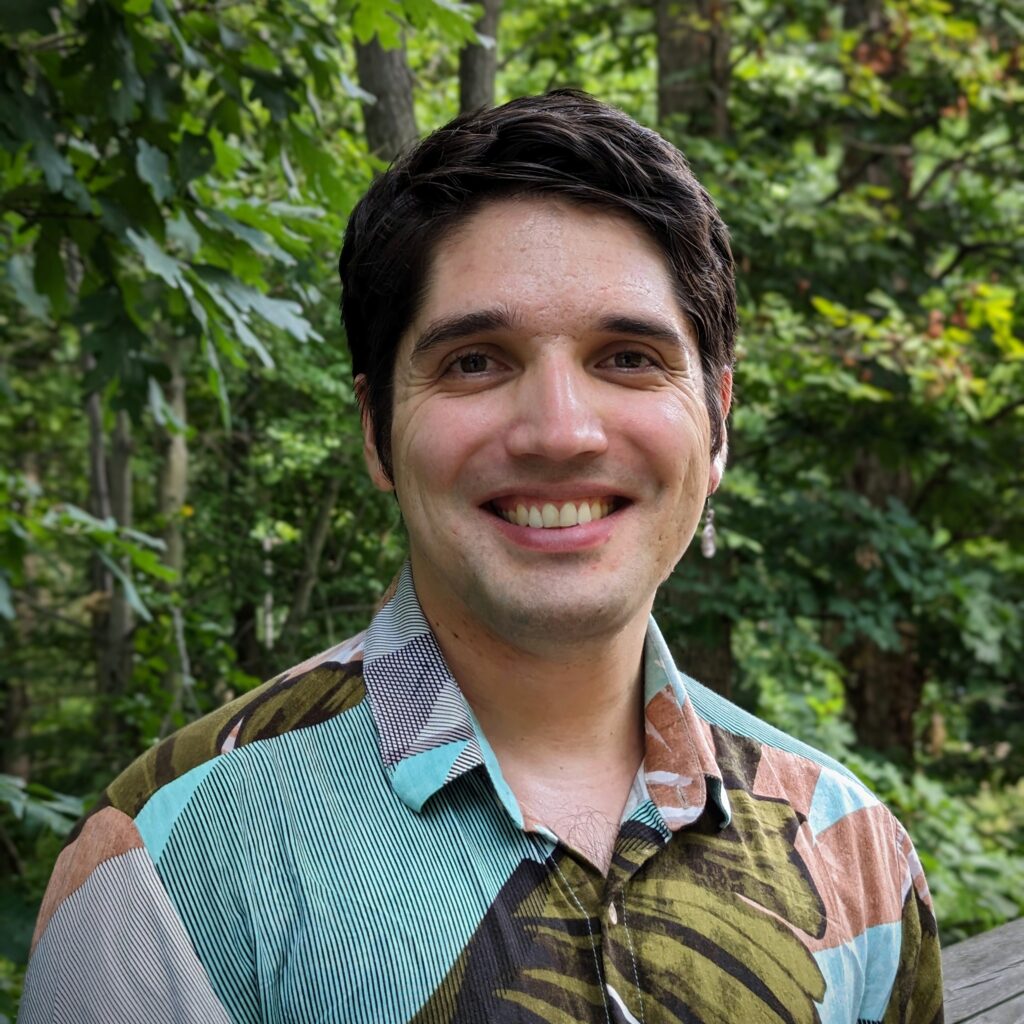
Former IDIA Pre-Doctoral Fellow Alonso Gabriel Ogueda is bridging this critical gap by fundamentally changing how we approach disease forecasting. His research proposes a novel methodology that integrates insights from social and behavioral sciences directly into mathematical models.
To achieve this, Alonso’s framework utilizes Agent-Based Modeling—which simulates the actions and interactions of autonomous individuals—combined with traditional compartmental models. He then applies Physics-Informed Neural Networks (PINNs) to process complex variables like geographic mobility and isolation data.
The result is a highly efficient, data-driven predictive tool. Instead of treating a population as static numbers, this model gives policymakers the flexibility to simulate a range of human behaviors and policy decisions before they are enacted.
By validating this framework against real-world data, Alonso is equipping public health officials with the insights needed to minimize unintended consequences during a pandemic. His work ensures that our future responses will be as dynamic and nuanced as the populations they aim to protect.
Meet the Researcher: Alonso Gabriel Ogueda is a researcher in mathematical sciences whose work focuses on integrating human behavior and efficient predictive analytics to enhance mathematical epidemiological models.